
Haenssing DevOps Episode 6 | Understanding the Power of IaCM
A recap of Harnessing DevOps, where Avyka’s Harness experts discussed IaCM and OPA-driven automation for modern DevOps teams.
Building Better Automation with IaCM
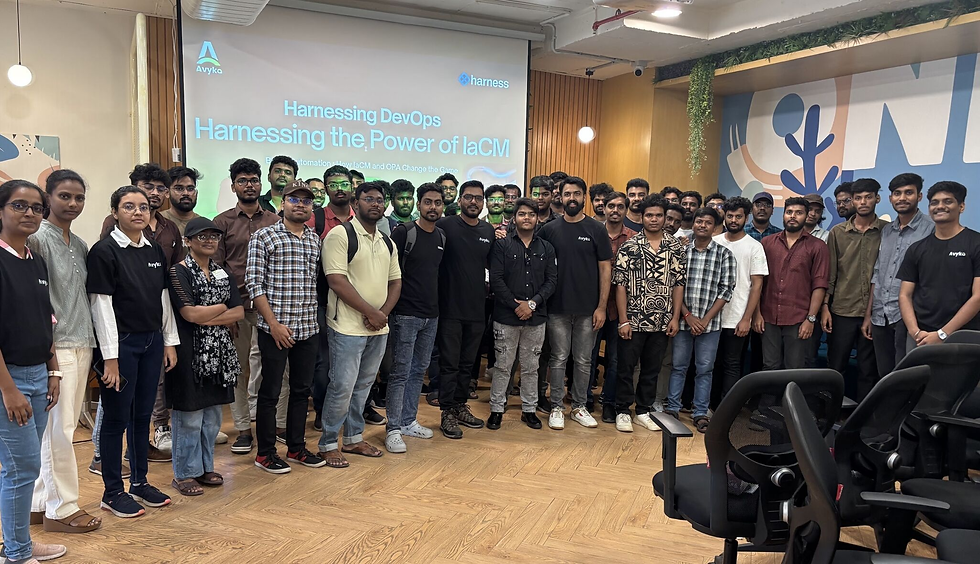
At Harnessing DevOps: Episode 6, our focus was clear, how Infrastructure as Code Management (IaCM) is transforming the way teams deliver, manage, and secure infrastructure. Through engaging demos and conversations, Avyka’s Harness specialists showcased how IaCM brings repeatability, reliability, and governance to every environment.
IaCM enables teams to manage cloud infrastructure through code, ensuring environments remain consistent across development, testing, and production. By automating provisioning and configuration, teams reduce human error, eliminate drift, and accelerate delivery cycles.
Why IaCM Matters?
Traditional infrastructure management often involves manual steps prone to mistakes and delays. IaCM changes this dynamic by turning infrastructure into version-controlled code, allowing teams to:
Automate setup and deployment for faster delivery
Maintain identical environments for predictability
Track every change with audit-ready version control
Recover environments quickly using infrastructure blueprints
Optimize costs by automatically spinning resources up or down
These capabilities translate into tangible business value, more reliable releases, improved security posture, and better cross-team collaboration.
Inside Harness IaCM
Harness IaCM brings these principles to life with an integrated platform designed for enterprise-scale DevOps operations. The solution allows developers and cloud engineers to collaborate on Terraform and OpenTofu configurations in a single, governed environment.
Key capabilities showcased during the session included:
Pipelines for Infrastructure Changes: Automate infrastructure provisioning within CI/CD pipelines.
Drift Detection: Identify and reconcile discrepancies between code and deployed state.
Cost Estimation: Forecast cost impact before deployment to avoid budget overruns.
State Management: Secure, hosted backend for managing state, access, and locking.
Participants also explored how Harness IaCM extends visibility into infrastructure performance, cost, and governance, helping teams balance agility with control.

Secure Delivery Through Policy-as-Code
Security was another major highlight of the session. Using Open Policy Agent (OPA), teams can embed policy checks directly into IaCM workflows. This ensures that every infrastructure change adheres to organizational standards before deployment.
Examples included enforcing instance size limits, restricting unapproved resources, and validating estimated cloud spend. Harness integrates OPA as a centralized service for policy storage, enforcement, and auditing, bringing compliance closer to the code layer.
The Outcome
Harnessing DevOps Episode 6 emphasized one key message: modern DevOps success depends on automation with governance. By combining IaCM with OPA-based policies, organizations can move faster without compromising control. The discussions reinforced how Harness empowers teams to deliver infrastructure safely, consistently, and at scale.
Closing Note
If you joined us at the event, thank you for being part of the conversations. If you couldn’t attend, we hope this recap gives you a clear view of the insights shared. We’d love to hear how your teams are exploring IaCM and policy-driven automation. Connect with us to continue the discussion.